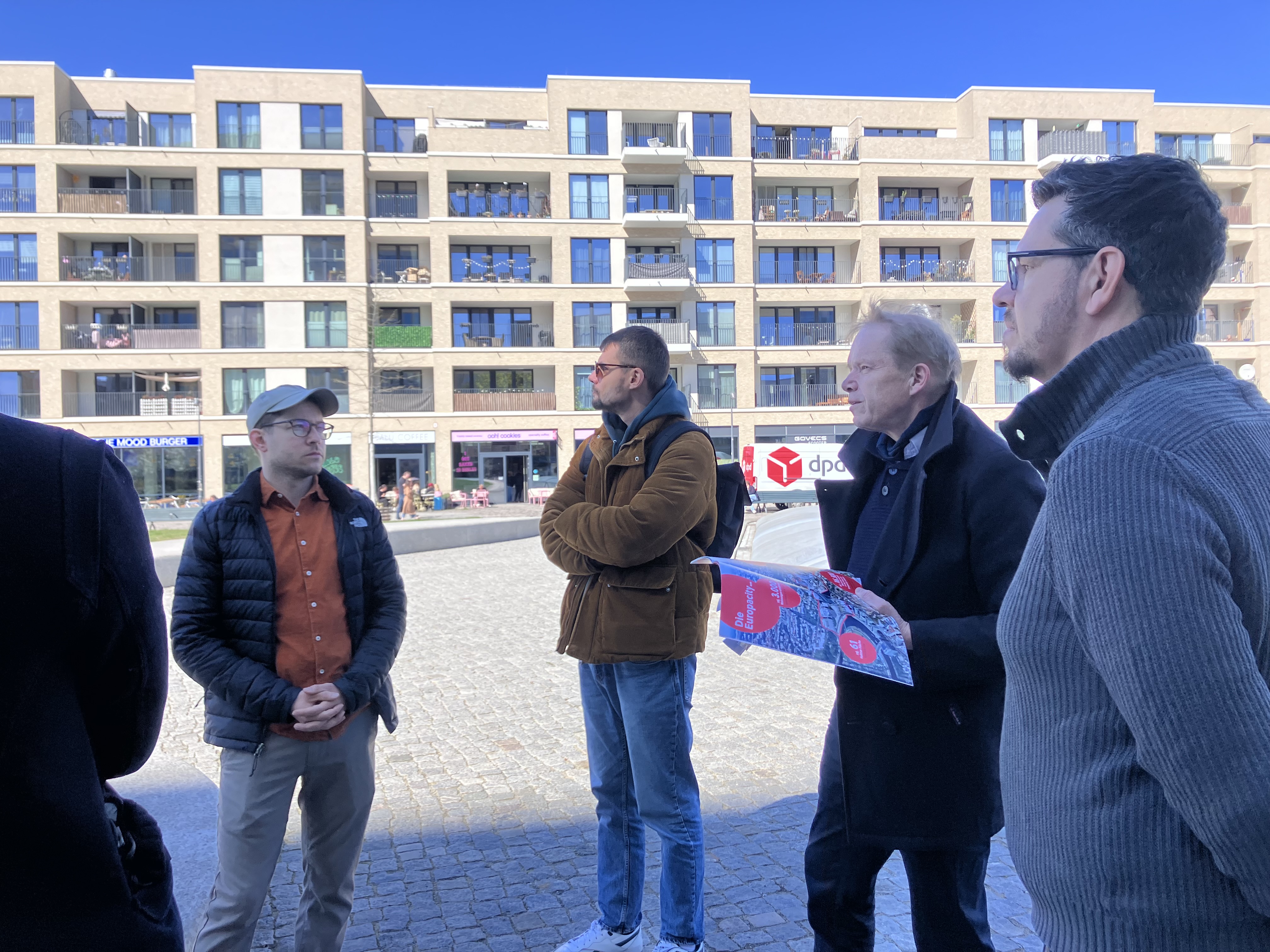


At the beginning of March this year, I received an email offering a meeting with Ephraim Gothe (District Councilor for Mitte, responsible for Urban Development) and Tilmann Häußler, AGH (Berlin State Parliament) candidate, both representing the SPD, to discuss important issues affecting us.
Of course, I gratefully accepted the offer—after all, we can only move things forward if politics, administration, and residents pull in the same direction.
By early April, the time had come.
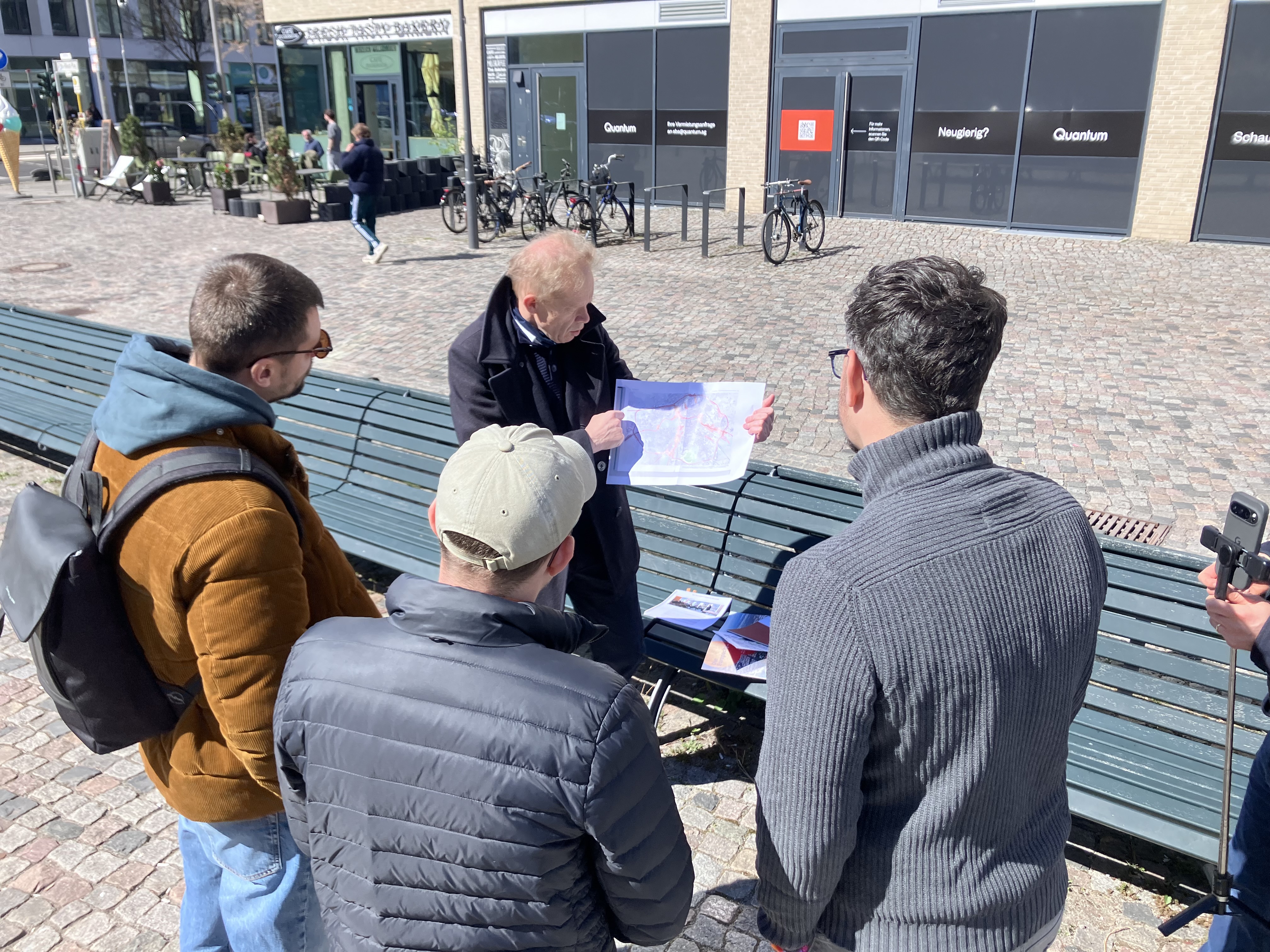
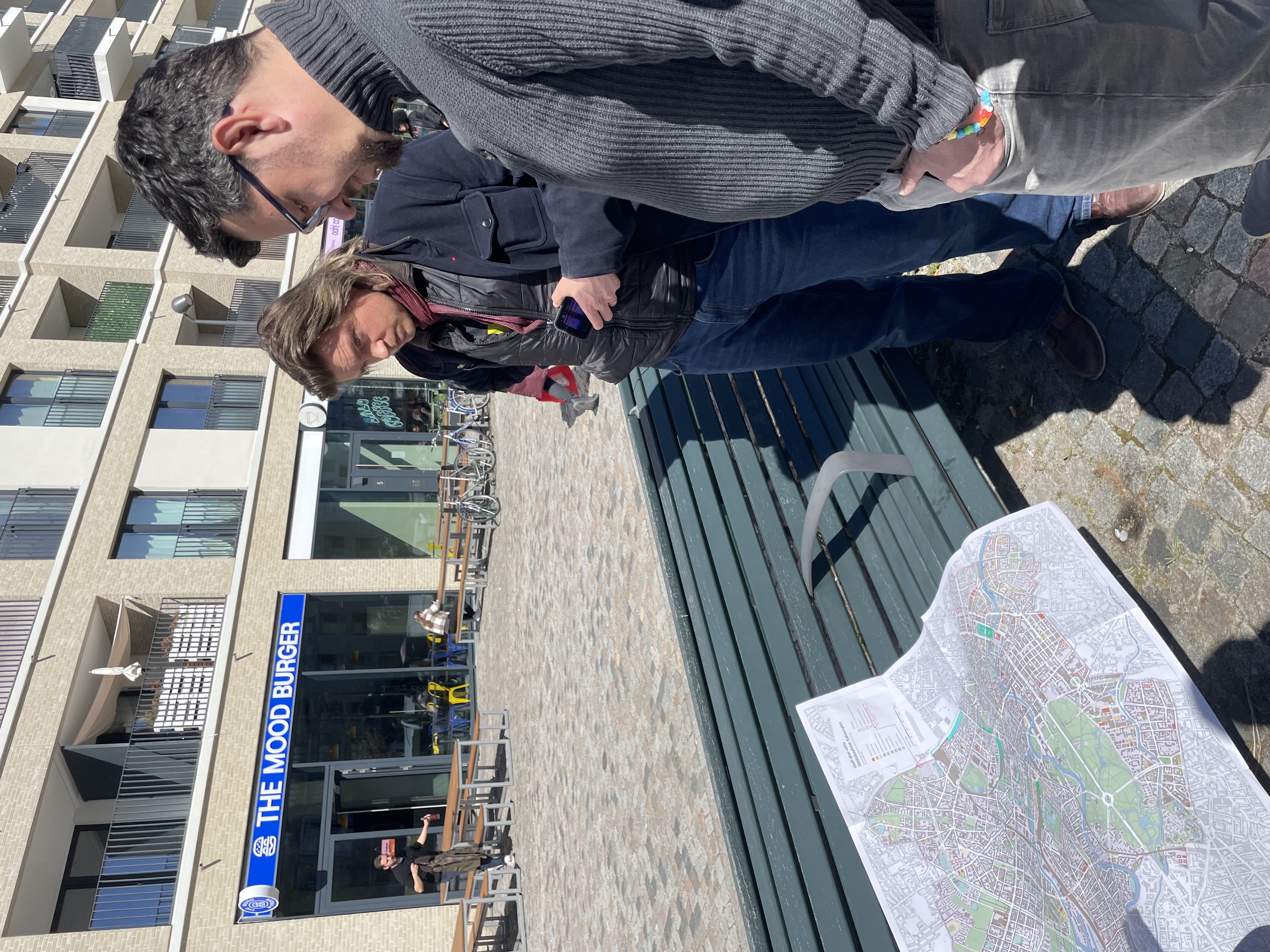
In addition to the "usual suspects" such as the parking situation in front of the Casalot, the trash at the open-air steps, traffic, culture, and green spaces, Mr. Gothe brought a wealth of expertise and several maps concerning urban development in general and the development of Europacity in particular. In the first 10–20 minutes, Mr. Gothe shared some fascinating insights into the origins of Europacity.
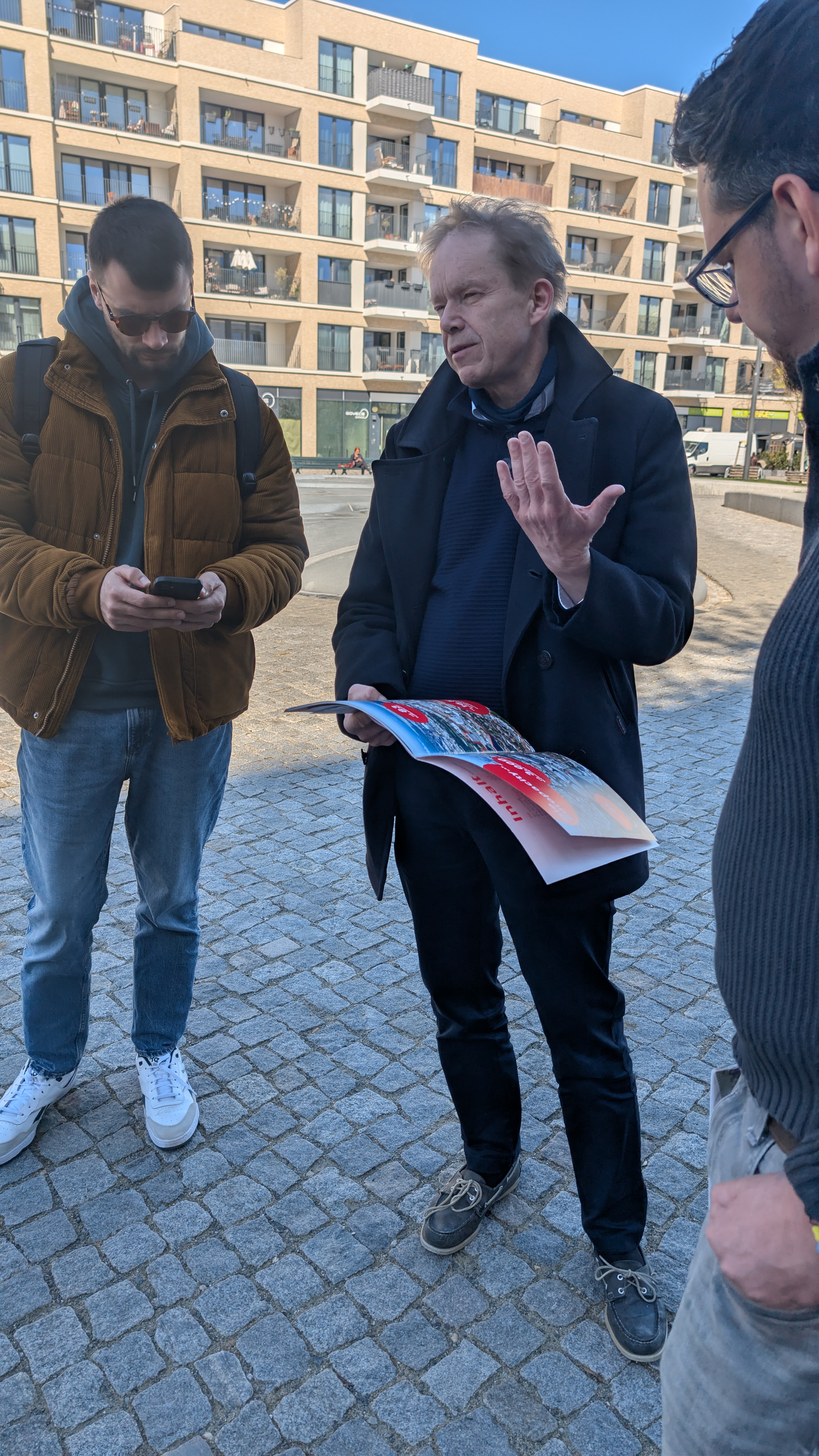
A Look into the Past
Planning and Land Use
At the beginning of the planning phase for the area, there were considerations about potentially building skyscrapers in the style of Frankfurt am Main. However, this idea was discarded because, at the time, Berlin still had an abundance of vacant apartments. As a result, the planning mostly stuck to Berlin's typical 5–6 stories, with just a few exceptions.
The location of a primary school was also discussed. However, this was not desired by the district mayor at the time. Consequently, there is no school on the actual grounds of Europacity. Instead, Mr. Gothe and others managed to arrange the current location of the "Grundschule am Nordhafen" on Boyenstraße via a somewhat indirect route.
When construction began on the first buildings, proximity to the Hamburger Bahnhof was a key factor, and the Rieck-Hallen were planned as a permanent art venue.
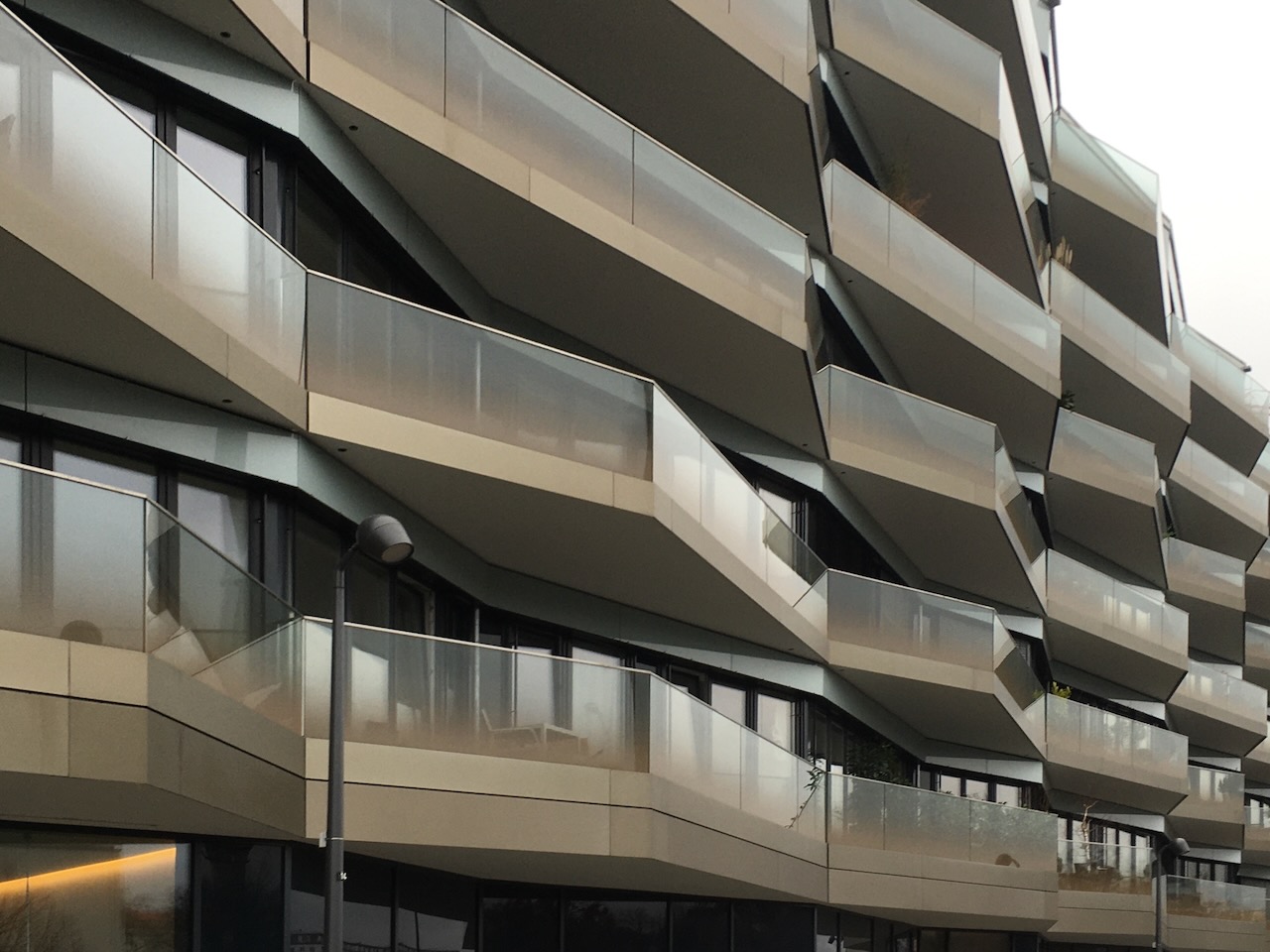
In case anyone has ever wondered why this building is named "KunstCampus" (Art Campus): you are not alone! Originally, galleries and similar spaces were planned for the entire ground floor.
Galleries will be created on the ground floor of the KunstCampus, showcasing paintings, installations, and sculptures by modern artists. Just as in the past, when changing exhibitions took place on the property in the "Halle am Wasser," a meeting place for vernissages and an area for artistic exchange will emerge once again. Source: Info flyer by the Groth Group
That sounds great, doesn't it? However, after the building was constructed by the Groth Group and the 120 condominiums were sold, the newly formed homeowners' association promptly decided against establishing art there. People presumably move to the center of Berlin because of the art and culture, but then prefer absolute peace and quiet at home. Personally, I believe that as a resident of central Berlin, you need a certain level of tolerance for the hustle and bustle of a major city. Otherwise, there will soon be nothing left of this great city.
Four Bridges for Europacity: How the Neighborhoods Were Meant to Grow Together
An interesting detail was that the master plan originally included four cross-connections stretching from Lehrter Straße in Moabit, right through Europacity, all the way to Scharnhorststraße in the Oranienburger Vorstadt.
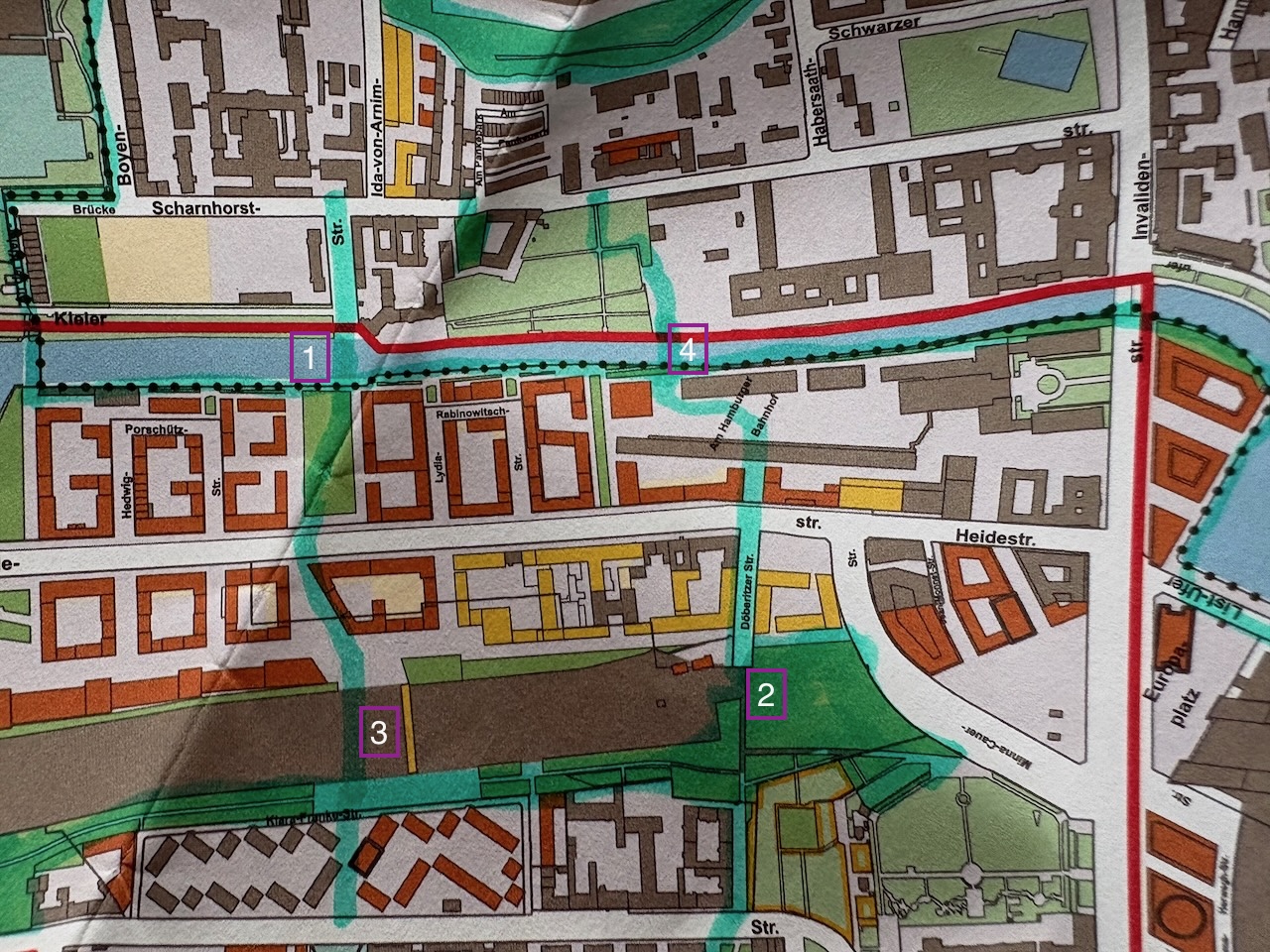
Here, you can see various connections in green leading from the Lehrter Kiez through Europacity to the other side of the canal.
- This is the already completed golden bridge, the Golda-Meir-Steg.
- This is the bridge over the railway tracks, which is part of the Döberitzer Grünzug currently under construction.
- This is the planned and funded pedestrian bridge over the railway tracks—though the start date for construction remains unclear.
- This one was unknown to me until now: it is a planned pedestrian bridge over the canal, which would roughly connect the Kunstcampus and the riverside promenade at the southern end of the Invalidenfriedhof. This is also marked on the Europacity master plan:
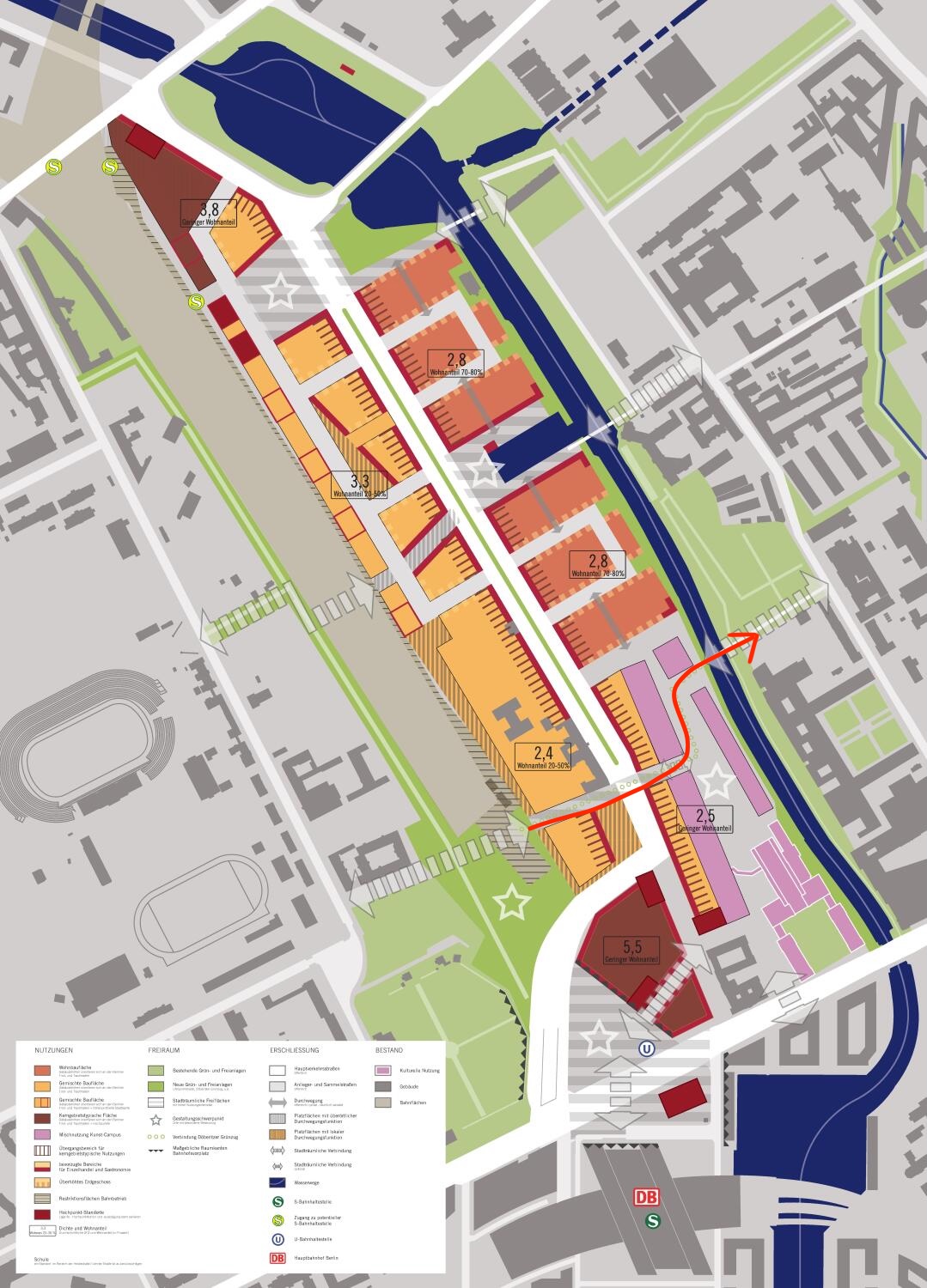
And if you look closely, some preliminary construction work has already been done:
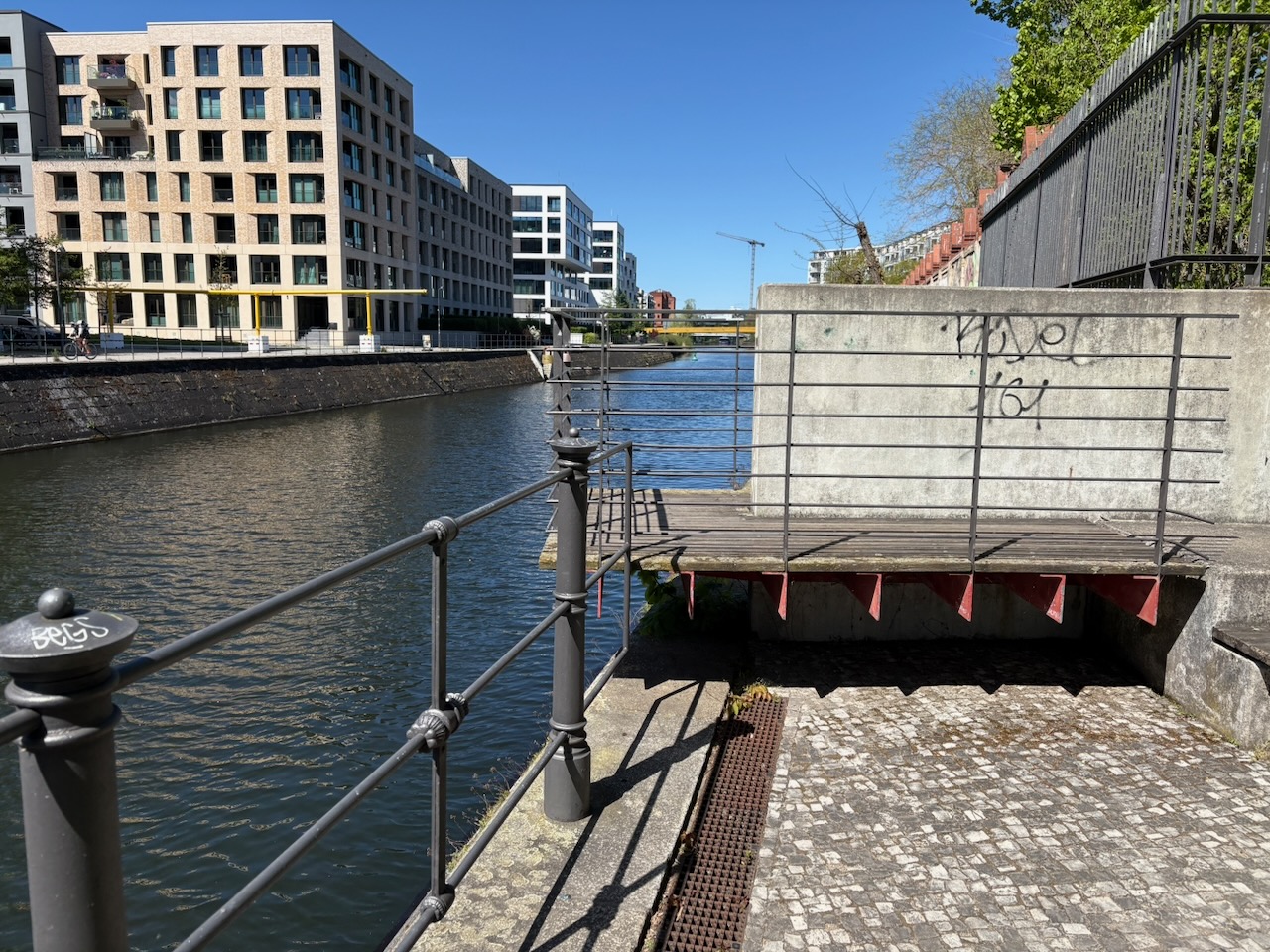
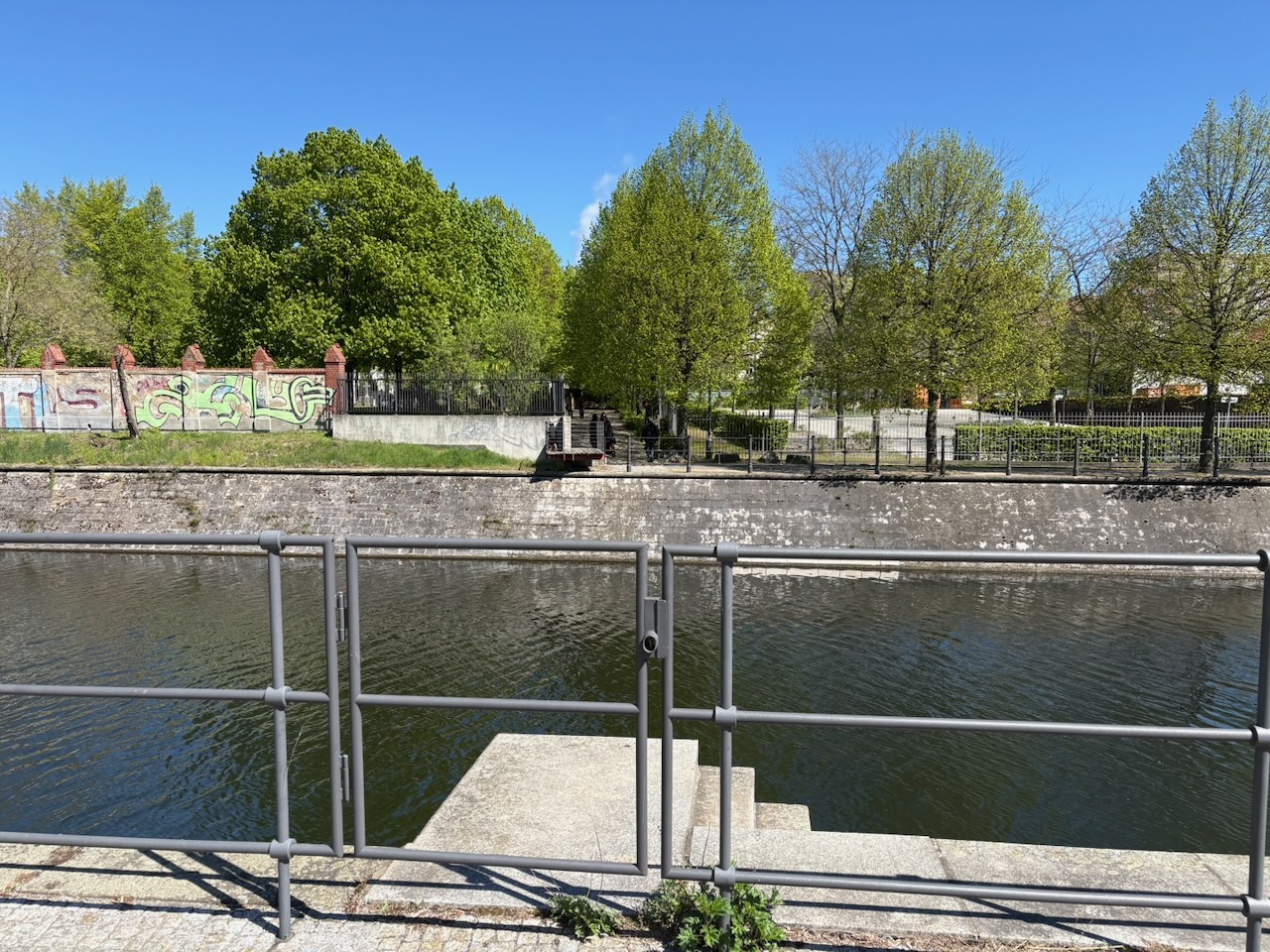
However, the implementation of this bridge was abandoned when it was decided in 2021 that the previously mentioned Rieck-Hallen, which belong to the Hamburger Bahnhof museum, should be preserved. They essentially "block" the path between Döberitzer Straße and the bridge. Whether this connection will ever be built is questionable to highly unlikely—and perhaps also unnecessary.
Current Problems – Big and Small
We then turned our attention to the problems that are, in principle, already well known: cars parking in front of the Casalot, on the green spaces, and blocking access for fire trucks and ambulances. Furthermore, there is still no weekly market.
Specifically, a motion has been submitted to the BVV (District Assembly) calling for the installation of an additional folding bollard with a hexagonal lock. However, it is questionable how effective this will be if there is no dedicated person to fold the bollard back up and lock it every morning at 10 AM once the official delivery hours have ended.
Currently, both the police—with a mobile precinct—and the public order office (Ordnungsamt) are on site. But this cannot be a permanent solution. Personally, I don't want the police acting as gatekeepers instead of attending to more vital duties.
Traffic
We also spoke about the—well, let's say less-than-ideal traffic situation. I mean, we have an award-winning bus line, so who wouldn't be thrilled?
Berlin's slowest bus moves at a jogging pace: Anyone traveling on line 147 needs patience. The bus running between Ostbahnhof and Wedding via the main train station was the slowest year-round line in the capital last year. Source: Tagesspiegel / Inquiry by Die Linke
Slow clap
Tillmann Häußler has taken note of this issue as well, but unfortunately, there is nothing concrete to report just yet.
Trash
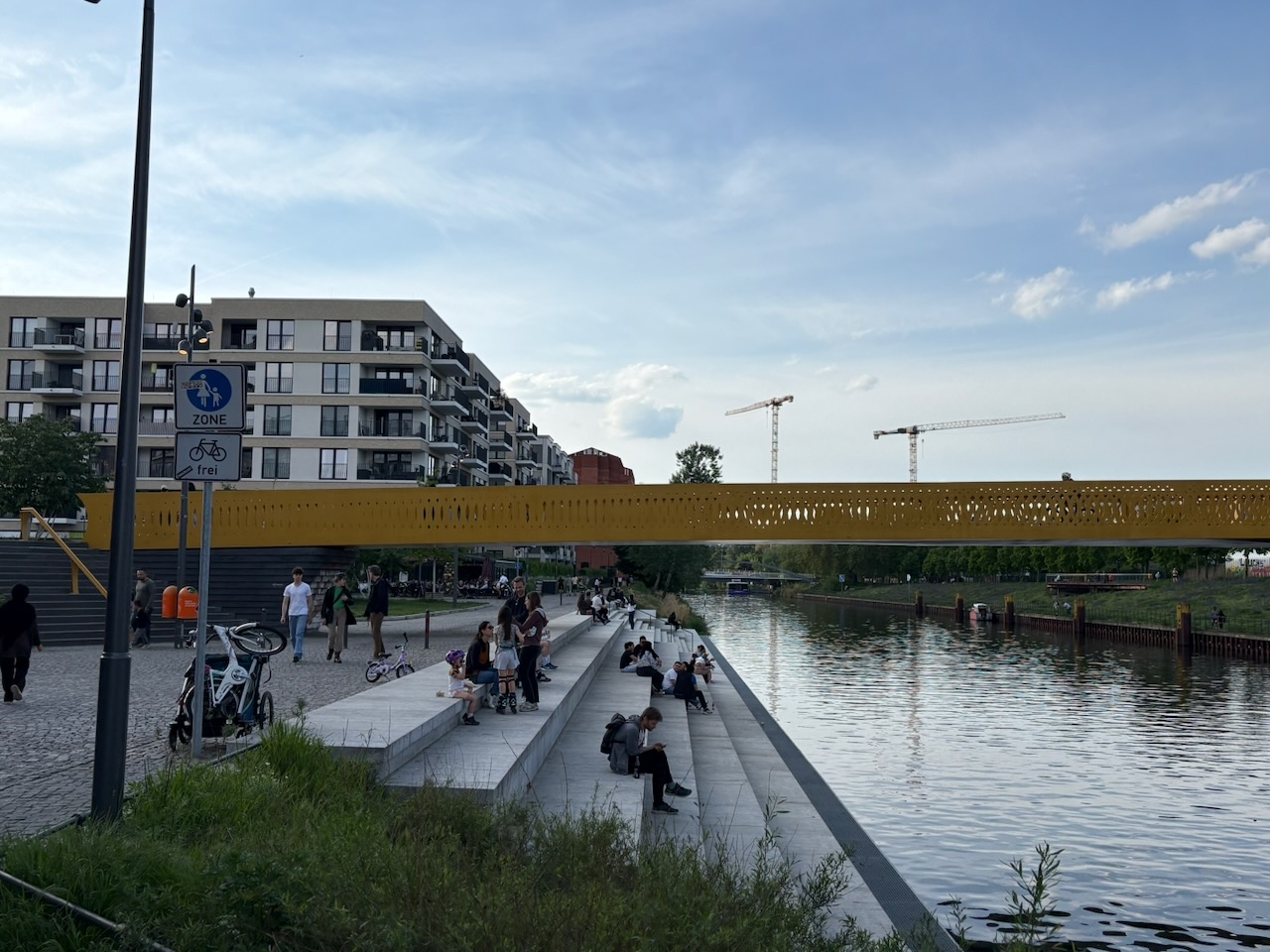
The square comes alive in spring; people gather and enjoy the cafés, the fountain, and the open-air steps.
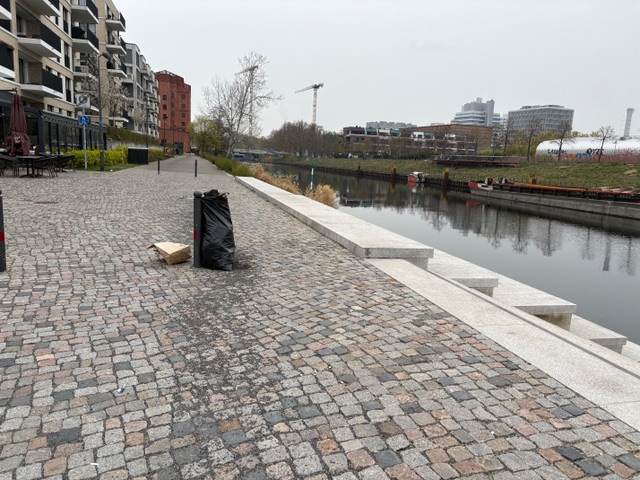
But where should the pizza box go? While the BSR (Berlin Waste Management) has put up some new orange trash cans, they have the typical small opening. A pizza box definitely won't fit in there.
Thanks to dedicated neighbors, private trash bags are now being hung up:
How can this be acceptable!? For comparison, this is how they handle it in Regensburg along the Danube:
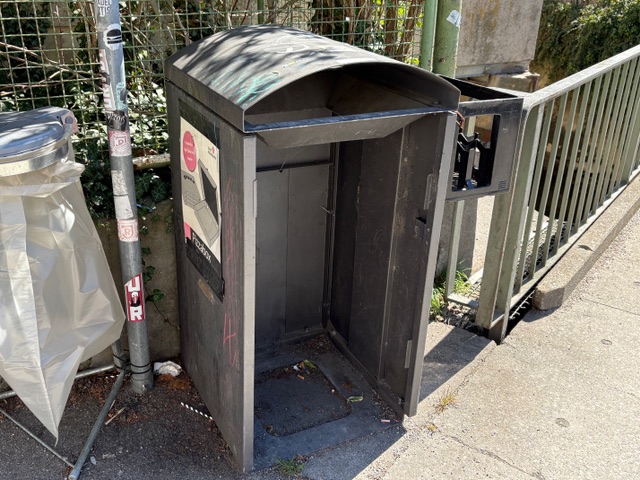
Why isn't that possible here? I previously discussed this with District Councilor Christoph Schriner, keywords: "roadside greenery".
The Weekly Market
I have previously reported here that both the SPD and other parties are currently putting pressure on the administration.
The SPD's motion was passed by the BVV on May 21st. Let's see if this drama takes a turn for the better.
Odds and Ends
We also talked about adding more shade, public toilets, and a playground on Otto-Weidt-Platz.
Culture and Civil Society
Another positive outcome was establishing contact with the Neighborhood Coordinator for Moabit Ost, whom I hadn't known about until now. Their role is to help promote and support community-oriented projects.
Together with other neighbors, I have already met with him and will report on this at a later date.
Conclusion
Once again, I have to say I was very pleasantly surprised by how much time is being taken to address the concerns of the residents here. I can only encourage everyone to "knock on the door" of their elected representatives and start a conversation. Not everything changes, and certainly not everything changes immediately, but you can definitely make a difference and, above all, improve things.